| | Welcome to the May/June 2026 edition of the Capacity Connection, your e-newsletter from the Effi Barry Training Institute (EBTI), offering curated training opportunities, timely tools, and key updates to support HIV prevention in Washington, DC. | | In This Issue: - Upcoming Live Webinars
- New Podcast Episode from EBTI - "Second Chance Voices: Peer Leadership in Sexual Health and HIV Education"
- May/June Awareness Observances and Resources
- Celebrating Pride in June: On-Demand Resources for LGBTQ Health Equity
- No-Cost Technical Assistance
| |  | | | Real Talk, Real Impact: HIV Prevention and Sex Work
Wednesday, May 27, 2026 at 11:00am Eastern | | This webinar will explore the intersections of sex work, access to healthcare, and community safety. Participants will gain practical strategies for building trust, engaging respectfully, and supporting autonomy while working to reduce stigma and create safer, more inclusive service environments. | | | | | | Trauma-Informed Care: Practical Tools for the HIV Prevention Workforce
Thursday, May 28, 2026 at 12:pm Eastern | | This webinar will provide an overview of trauma-informed care and its application across clinical and programmatic HIV settings. Participants will explore how trauma impacts health behaviors, engagement in care, and service delivery, and will be introduced to practical, evidence-informed tools that can be integrated into everyday practice. | | | | 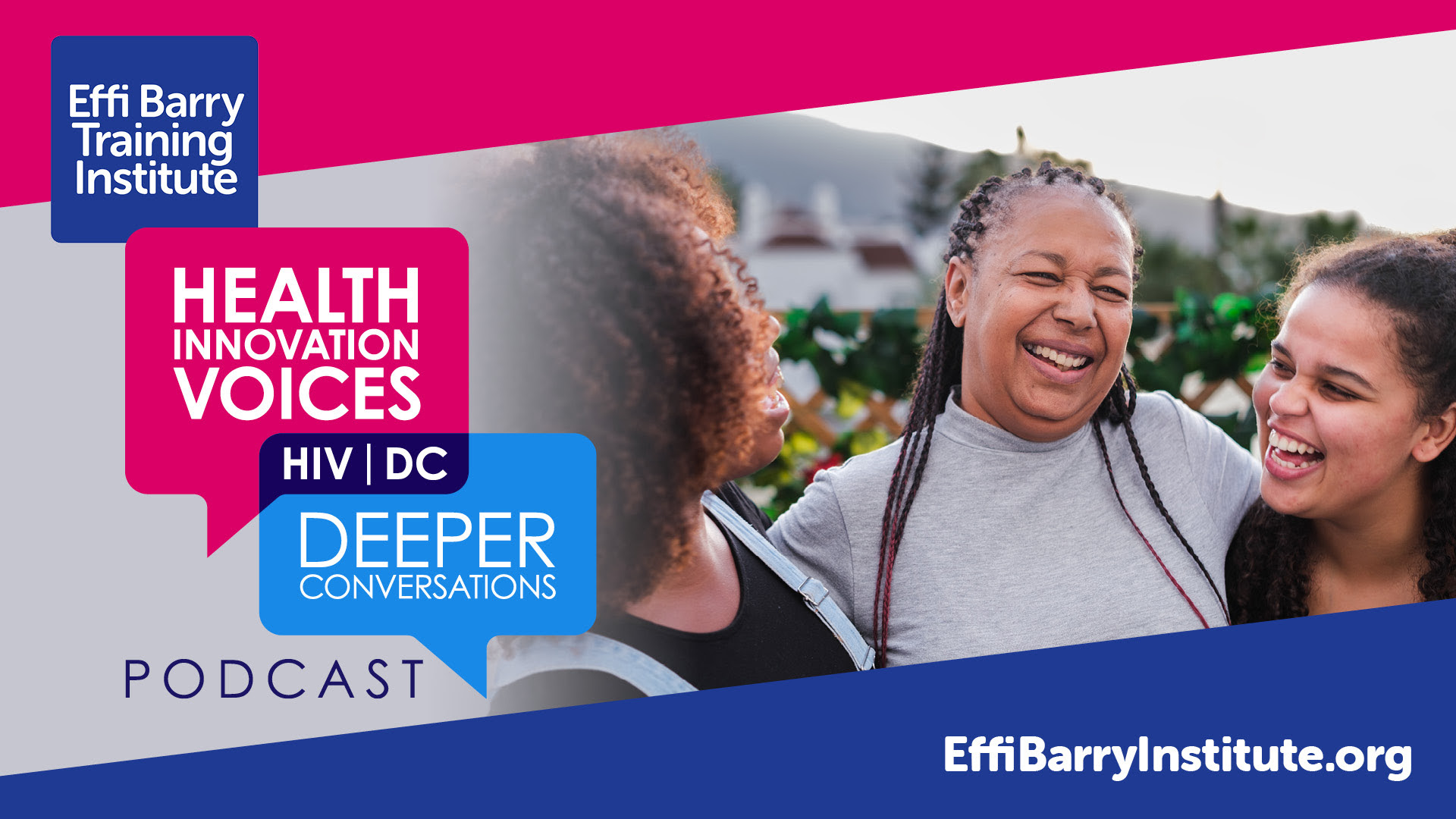 | New Podcast Episode from EBTI
Second Chance Voices: Peer Leadership in Sexual Health and HIV Education | | Last month was recognized nationally as Second Chance Month, a time dedicated to supporting the successful reentry of individuals returning to their communities. HealthHIV sat down with two community members to record our latest episode of Deeper Conversations (HIV-DC) in recognition of Second Chance Month to highlight their lived experiences. This episode honors the resilience of returning citizens and the importance of equitable access to sexual health and HIV prevention and care. Through the voices of those with lived experience, we explore how education, trust, and community-led efforts are creating meaningful second chances and improving health outcomes in Washington, DC. | | | |  | | | May/June Awareness Observances and Resources:
Centering Prevention, Advocacy, and Wellness | | May Awareness Observances | | May is Mental Health Awareness Month, as well as Viral Hepatitis Awareness Month. The following resources from the Effi Barry Training Institute explore the relationships between HIV, viral hepatitis, and co-existing mental health challenges. - On-Demand Training - The Intersection of Mental Health and HIV Among Youth
This webinar increases the audience’s understanding of mental health challenges among children, adolescents, and young adults with HIV. The webinar provides strategies for addressing particular needs and promoting overall physical and mental health.
- On-Demand Training - Mental Health 101
HIV-affected populations typically require a full range of services to manage the illness and the significant stress and problems HIV causes. Service needs are increased when clients have mental health problems in addition to living with HIV. This training gives an overview of various mental illnesses, signs and symptoms, and treatment options.
- On-Demand Training - The A-B-C’s of Hepatitis C and HIV Co-Infection
Hepatitis C virus infection affects a large percentage of people with HIV. The Centers for Disease Control and Prevention found that in 2009, approximately 21% of adults with HIV in the US also tested positive for the hepatitis C virus. This webinar discusses the risk factors and preventative measures of hepatitis C virus infection for people with HIV. | | | | June Awareness Observances | | In addition to June being Pride Month (see more information below), we also recognize several important HIV awareness observances, including HIV Long-Term Survivors Awareness Day (June 5), National Caribbean American HIV/AIDS Awareness Day (June 8), and National HIV Testing Day (June 27). These observances highlight the importance of honoring lived experiences, promoting culturally responsive care, encouraging routine HIV testing, and supporting access to prevention and treatment services for all. Build your knowledge this month in honor of June’s HIV awareness days by exploring these EBTI resources. - On-Demand Training - Best Practices for Whole Person Care: “HIV Across the Lifespan: From Pediatrics to Aging with Care”
This session explores the unique medical, psychosocial, and systems-level considerations impacting both older adults and pediatric populations living with HIV. Participants will gain insight into emerging trends across the lifespan, including perinatal transmission, pediatric treatment and transition to adult care, aging-related comorbidities, and long-term HIV management. The session also highlights best practices in age-responsive and family-centered HIV care, along with strategies to support health, stability, and quality of life from childhood through older adulthood.
- On-Demand Training - Enhancing Care for Migrant Clients with HIV: Strategies for Support and Access
This webinar provides practical strategies to strengthen care and access for migrant clients affected by HIV, with a primary focus on African migrant communities. Drawing on the presenter’s extensive work with these communities, participants will learn culturally grounded approaches that support engagement, communication, and continuity of care.
- Fact Sheet - HIV Testing and Care in Emergency Departments
Part of "The Power of Prevention: Community Strategies for Safer Sexual Health Series," this fact sheet provides information on navigating HIV testing in Emergency Departments (EDs) as a confidential part of routine care. | |  | Celebrate Pride this June!
June is All About Pride and Advancing LGBTQ Health Equity | | June is Pride Month, a time dedicated to celebrating the resilience, history, and contributions of LGBTQ communities while continuing the fight for equity, inclusion, and health justice. Pride Month also serves as an important opportunity to raise awareness about HIV prevention, testing, treatment, and the ongoing efforts to end HIV-related stigma impacting LGBTQ individuals and communities. We invite you to view the following on-demand resources from the Effi Barry Training Institute focused on advancing LGBTQ health, HIV awareness, and community well-being. - On-Demand Training - The Trans Experience: Pride in Our Health
In this session, participants explore barriers that often prevent transgender and gender-diverse individuals from accessing preventive health care and routine screenings, including challenges related to insurance coverage, discrimination, and limited access to providers experienced in transgender care. The webinar also highlights the importance of accurate and comprehensive transgender health data and discusses strategies for providing specialized, culturally responsive, and affirming care in non-stigmatizing health care environments.
- On-Demand Training - Assessing Organizational Cultural Responsiveness to Engage Clients
This LGBTQ inclusion session engages participants with interactive activities, discussions, and team building exercises. Upon completion participants will have a greater understanding of LGBTQ language, culture, and appropriate ways to engage community members. In addition, participants will be able to differentiate between gender identities, sexual orientation, and other cultural definitions.
- Toolkit - Creating LGBTQ-Affirming Organizations
This toolkit is designed to assist health care organizations in Washington, DC to better serve LGBTQ populations. Please view the PDF for more information. | |  |
NO-COST Technical Assistance | | The Effi Barry Training Institute is dedicated to empowering current and prospective HAHSTA grantees and community-based organizations with the knowledge and tools to thrive. We offer targeted training and technical assistance across a variety of key areas. We provide technical assistance for: - Navigating the Fee-for-Service business process
- Mastering foundational HIV service competencies
- Advancing expertise in healthcare systems, data, and health informatics
- Implementing high-impact prevention strategies (including biomedical models)
- Integrating emerging evidence-based practices
Our approach blends group-level training, hands-on boot camps, dynamic community forums, and tailored one-on-one consultations. At HealthHIV, we believe in the power of holistic, patient-centered care. Our capacity-building efforts are designed to help organizations enhance patient outcomes, drive efficiencies, and maintain long-term sustainability. Through our innovative approach, we build robust, sustainable systems and services that address every stage of the HIV care continuum. Submit a Technical Assistance Request form to connect with EBTI today or scan this QR code: | |  | | | | | | | | | | | | | The Effi Barry Training Institute, led by HealthHIV, provides training and technical assistance to support current and prospective HAHSTA grantees and community-based organizations in implementing fee-for-service business models; basic HIV service competencies; advanced skills in health care systems; data and health informatics; high-impact prevention programs; and emerging evidence-based or informed approaches through a series of group trainings, boot camps, community forums, and individual consultation. | | | | This project is funded wholly, or in part, by the Government of the District of Columbia, Department of Health, HIV/AIDS, Hepatitis, STD, and TB Administration (HAHSTA). | | | | | | | | | | For the latest program updates, follow us on: | | | | | | | | |